stevecook-uk
Member
- Joined
- Apr 2, 2025
- Messages
- 7
2nd in a twelve volume set.
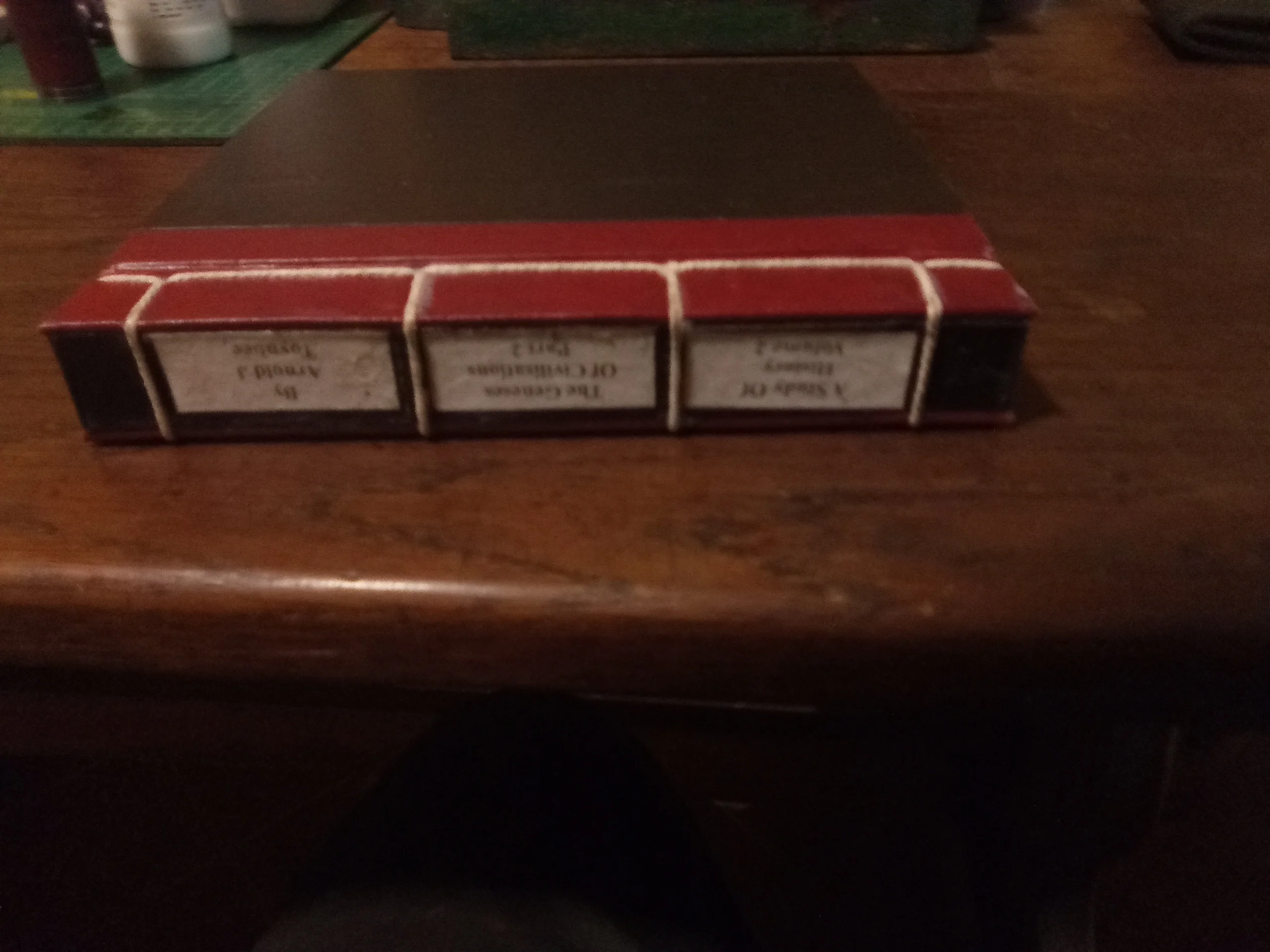
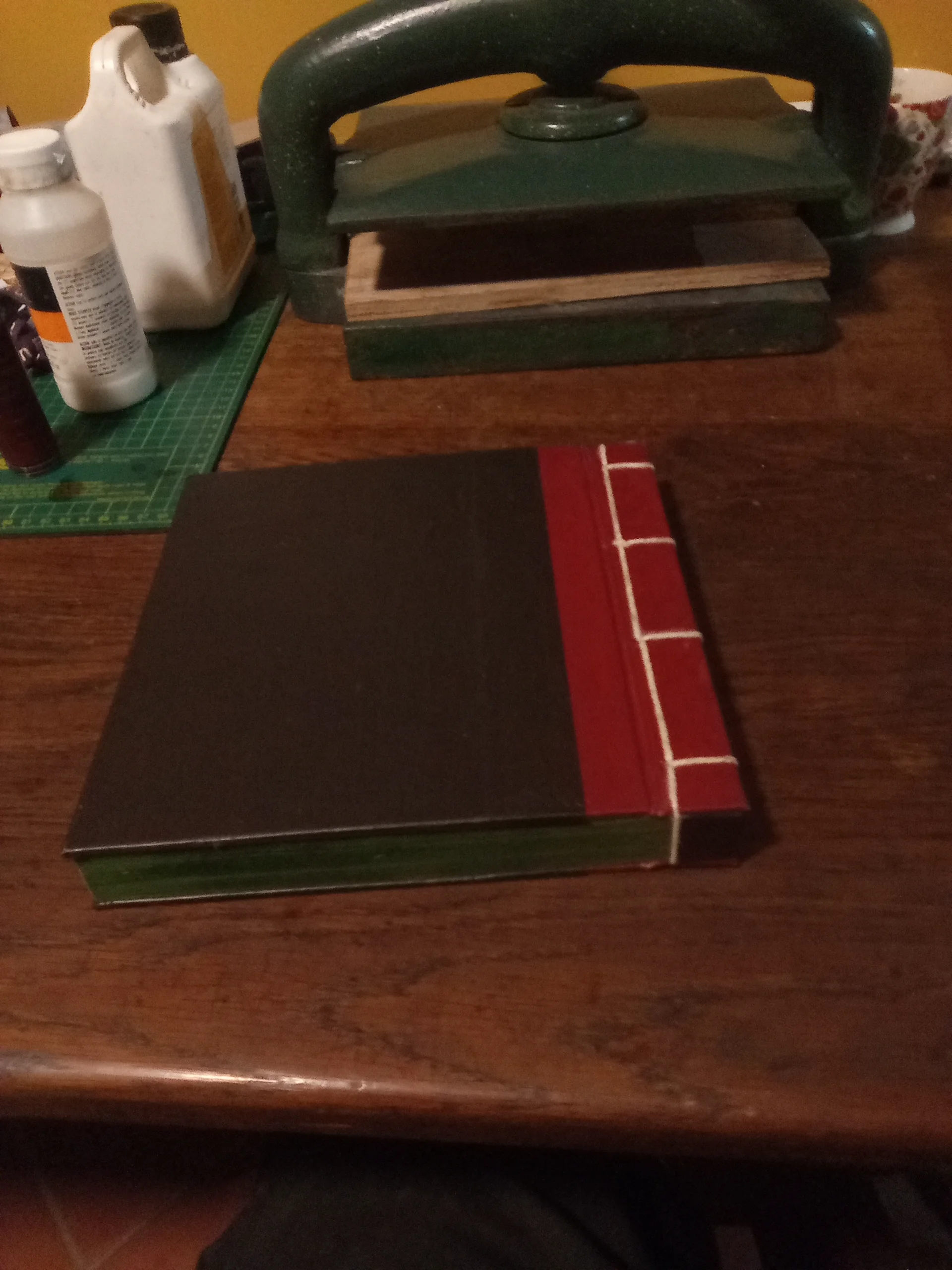
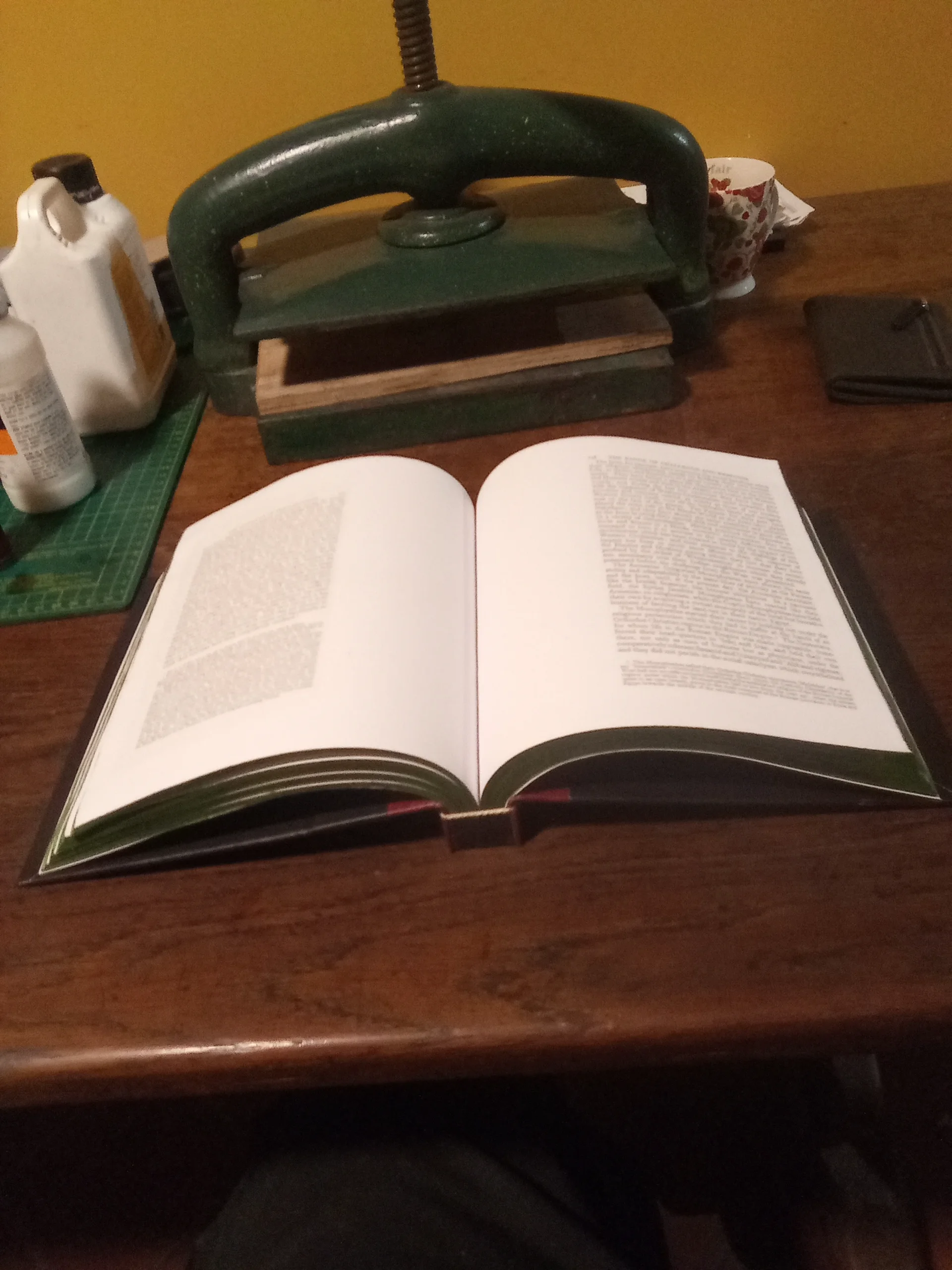
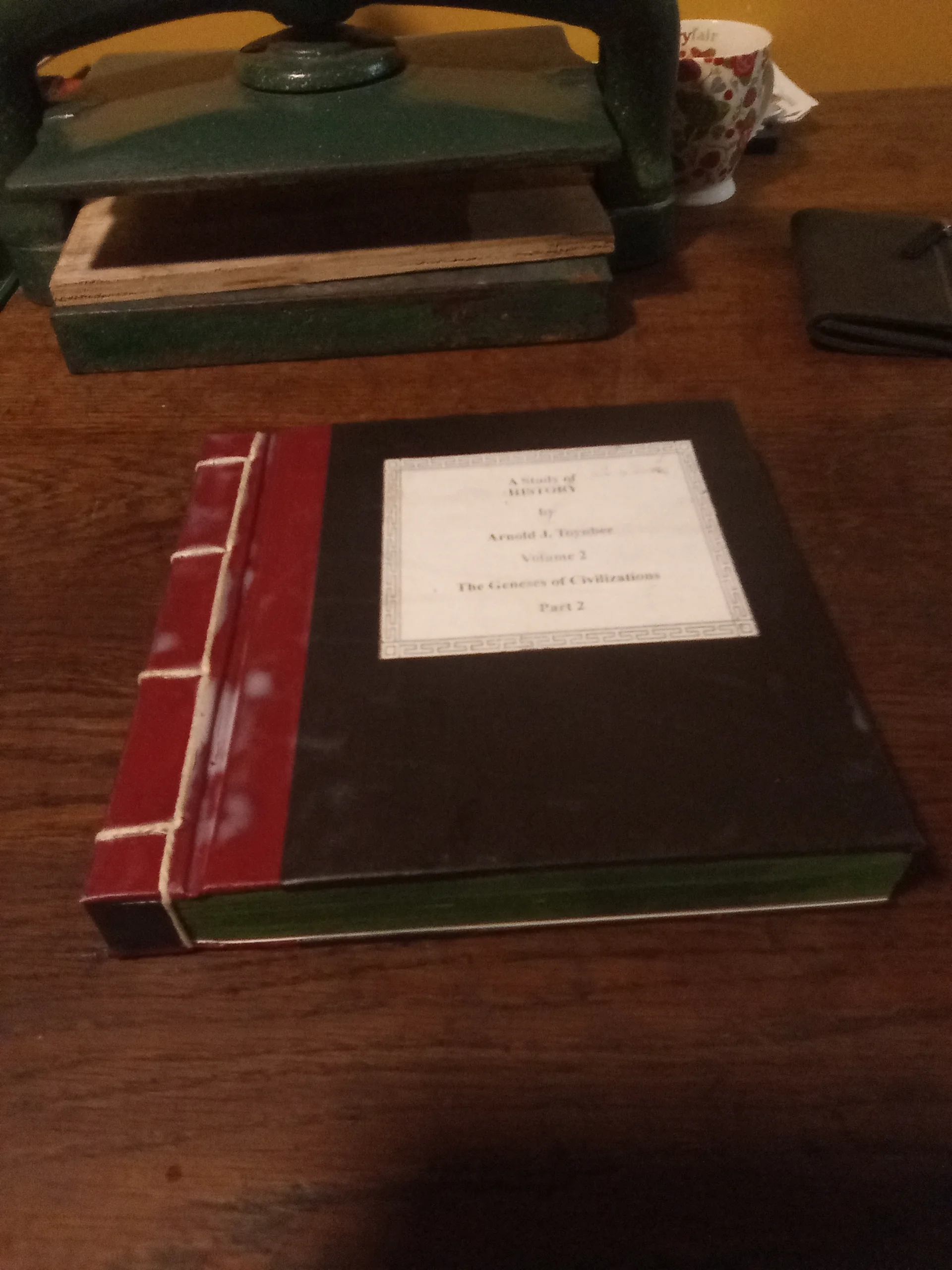
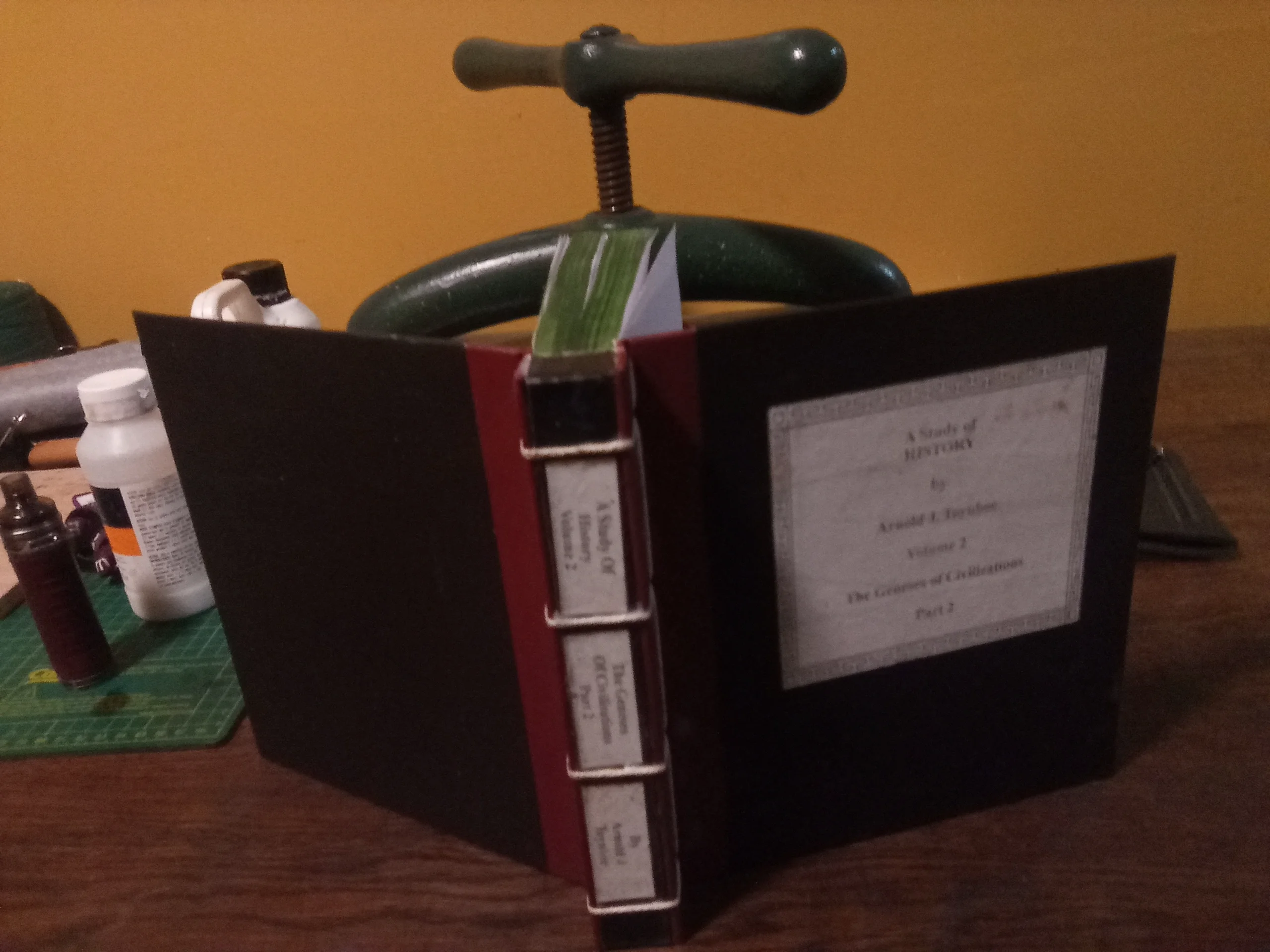
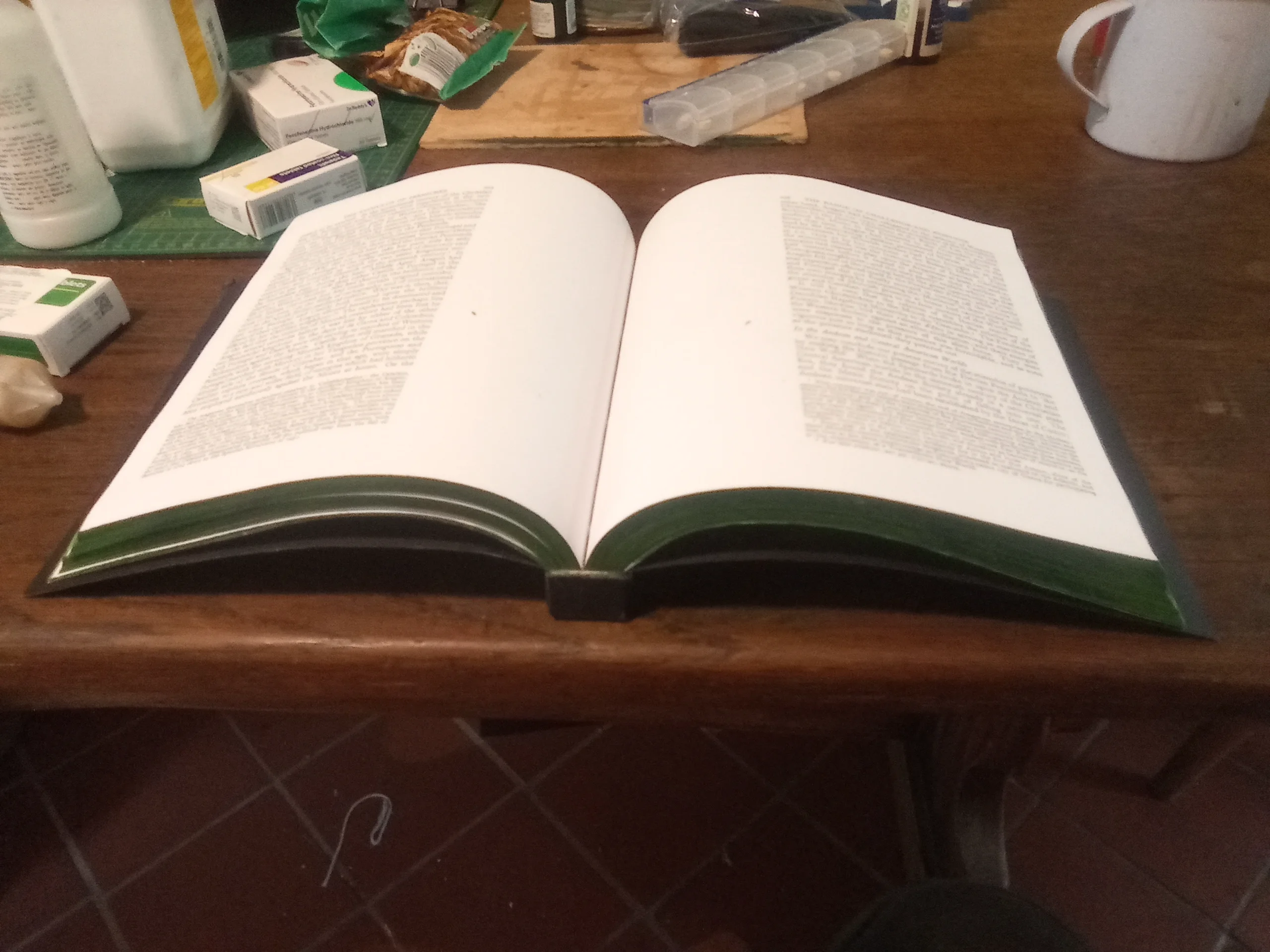
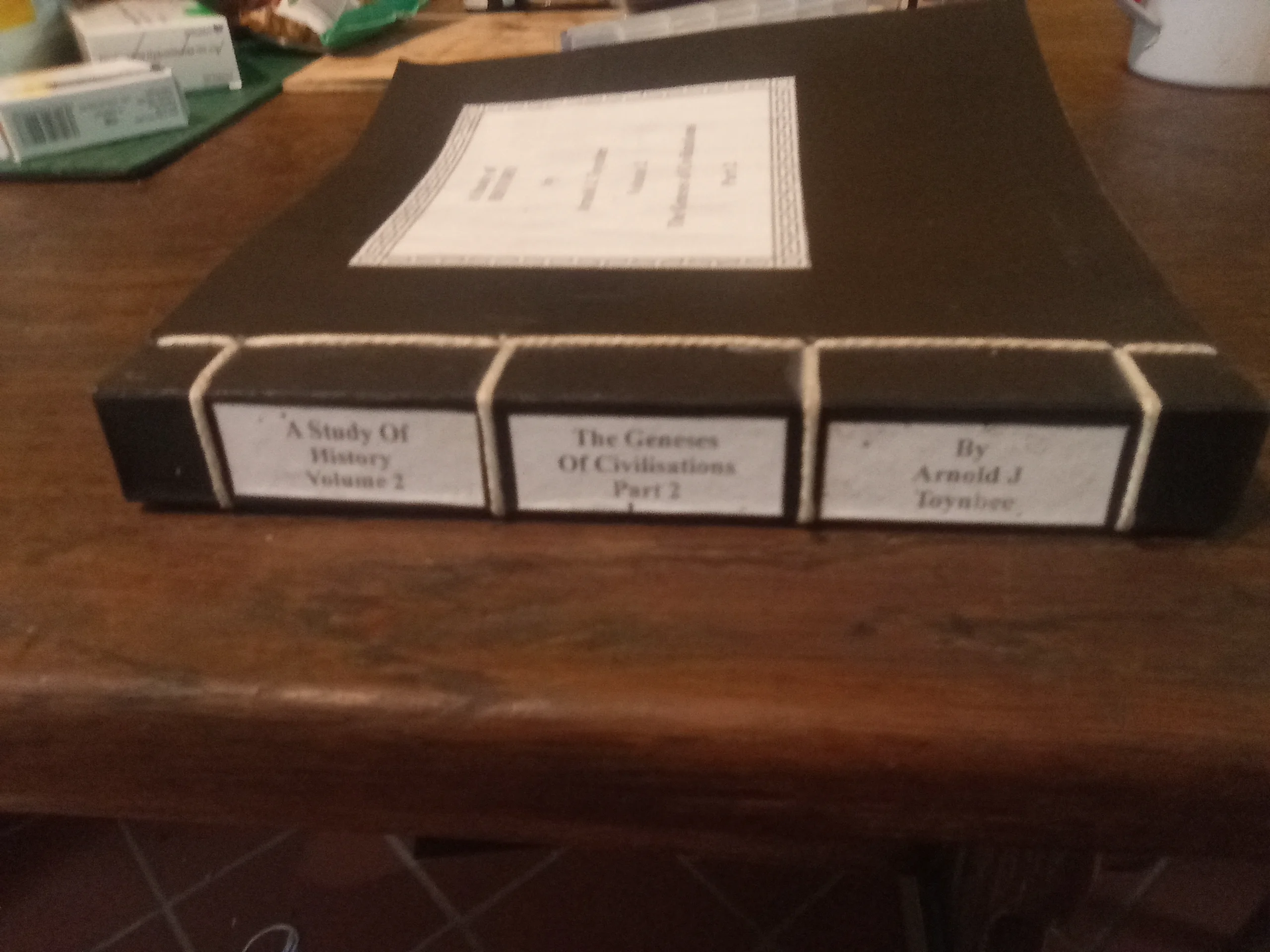
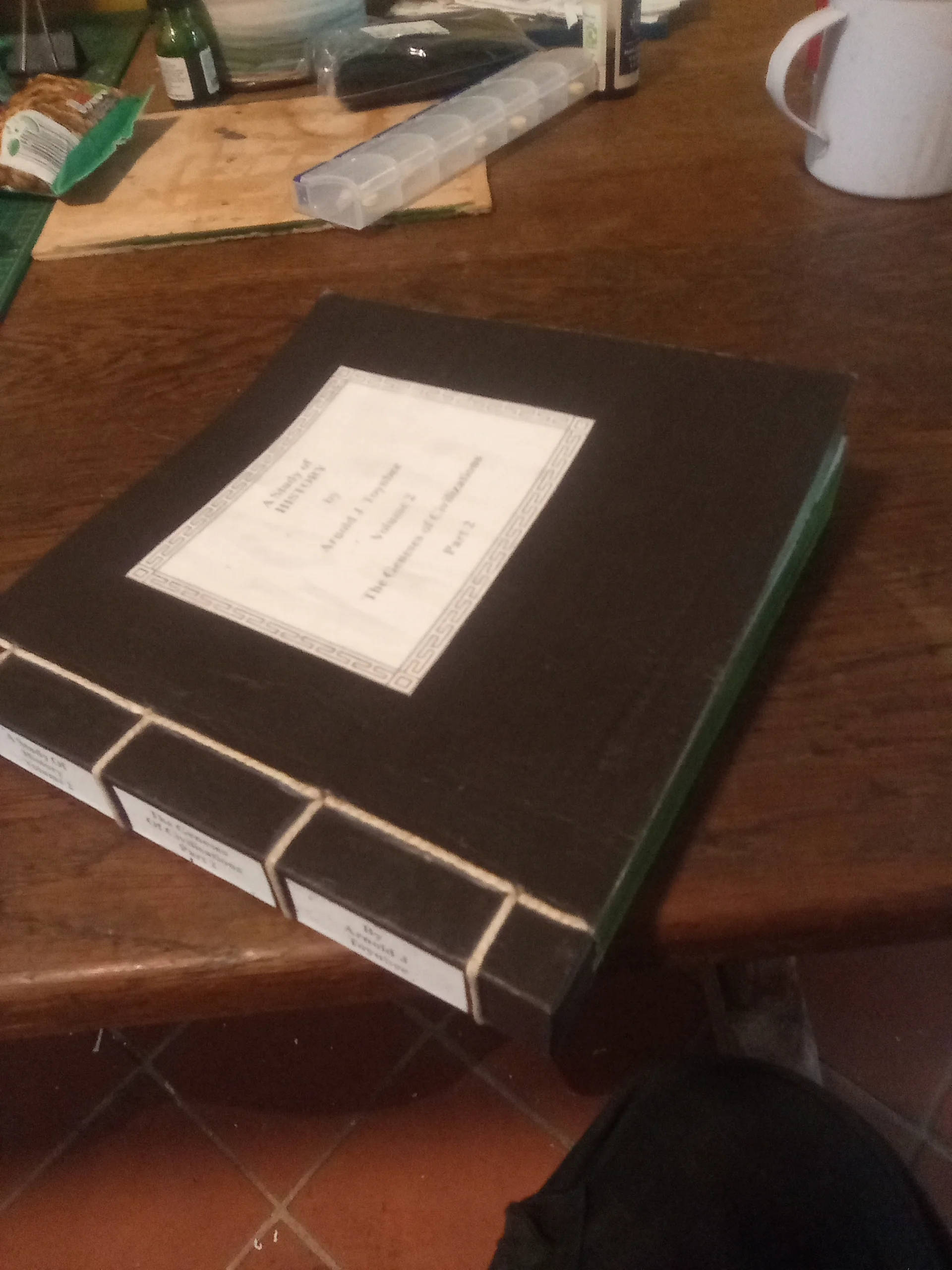
It's pretty much a full-on Japanese Stab binding now apart from the Lumbecking on the spine to reinforce it which has been further reinforced with sawn in cords and also a 2mm thick card glued on the spine to allow for spine labeling. All of the above spine reinforcement has been done in order to remove the somewhat flexibly, twisty tendencies of traditional Japanese stab bound books when they get over a certain page count. This method allows for books of, so far as I have been able to ascertain thus far, pretty much any thickness. That is to say, they retain complete structural integrity even when the page count is several hundred (500 + in this case).
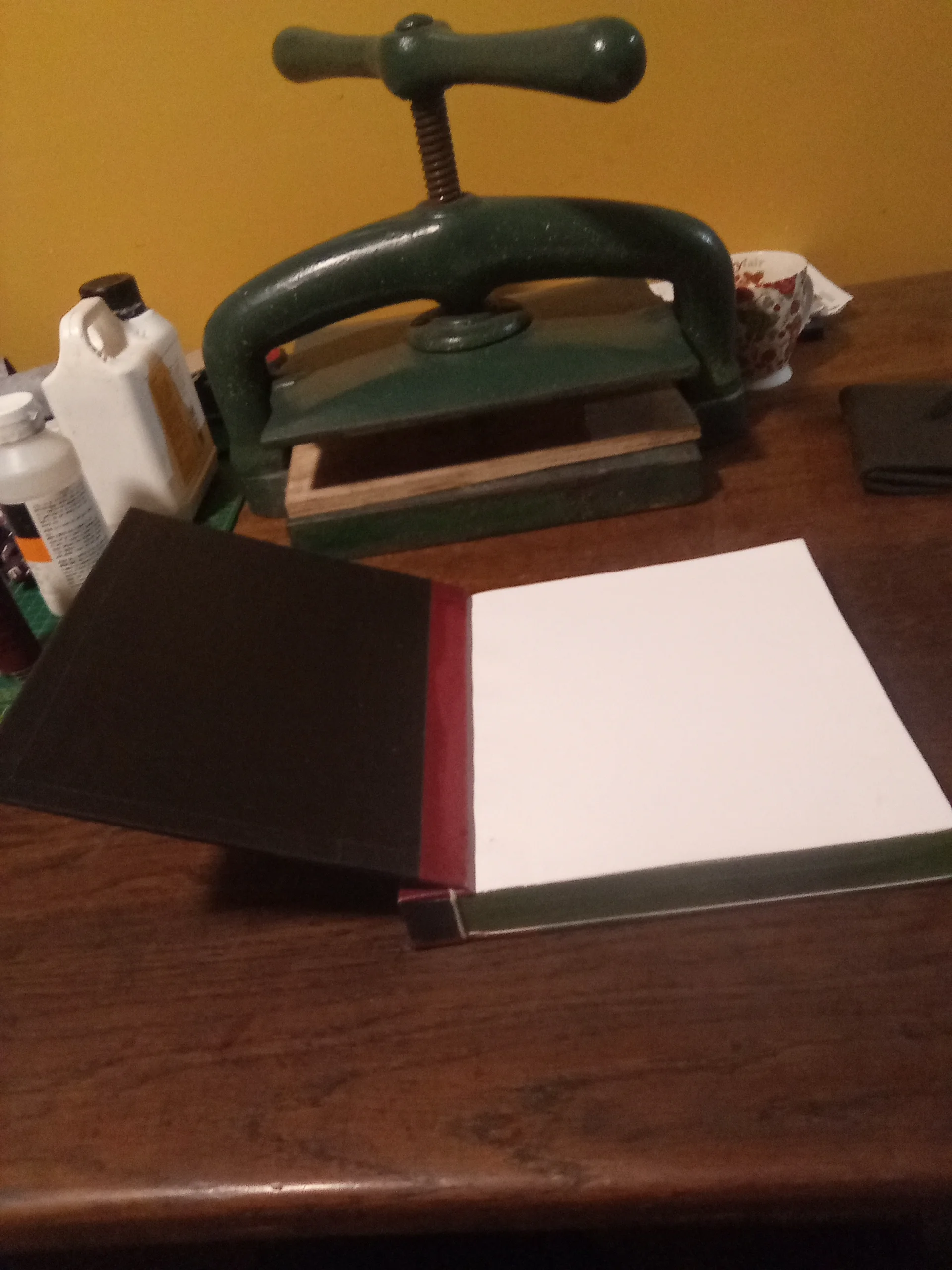
I've gone with somewhat soft covers this time as I couldn't be arsed, on this occasion, to make up the hinge mechanisms I've been doing on my previous lumbeck/Japanese stabs in order for them to be able to be hardbacks. I've also done away with overhanging covers which, again, is closer to the traditional stab bound book style. Other improvements (in my opinion) include narrowing the width of the spine on the cover face to just 2cm. I can get away with this (compared to much wider ones on traditional Japanese stab bindings) due to the lumbecking mentioned earlier. This has the benefit of providing more of the page to be available to able to drape effectively when turning the pages. Another thing I have done, due to getting rid of the overhang of the covers, is to sink the cord into the bottom and top of the text-block as it wraps around it. This is to allow the book to sit cleanly upright without the cords in the way (by forming a bump) when on a bookshelf.
Finally, for this book, the covers are laminated (double thickness) black card (about 180gsm each, so 360gsm in total I think) which I have further strengthened with acrylic clear matt varnish. It's pretty strong. But, it remains to be seen how well they hold up at the hinges. To counter the above concerns, on the next book, I intend to further laminate the covers, inside and outside, with book-cloth, from the spine edge to about 3cm into the face of the cover (1cm past the hinge line). That should significantly improve the durability of the spine hinges.
The books are still pretty agricultural/rustic looking. But, are getting neater as time goes on.
It's pretty much a full-on Japanese Stab binding now apart from the Lumbecking on the spine to reinforce it which has been further reinforced with sawn in cords and also a 2mm thick card glued on the spine to allow for spine labeling. All of the above spine reinforcement has been done in order to remove the somewhat flexibly, twisty tendencies of traditional Japanese stab bound books when they get over a certain page count. This method allows for books of, so far as I have been able to ascertain thus far, pretty much any thickness. That is to say, they retain complete structural integrity even when the page count is several hundred (500 + in this case).
I've gone with somewhat soft covers this time as I couldn't be arsed, on this occasion, to make up the hinge mechanisms I've been doing on my previous lumbeck/Japanese stabs in order for them to be able to be hardbacks. I've also done away with overhanging covers which, again, is closer to the traditional stab bound book style. Other improvements (in my opinion) include narrowing the width of the spine on the cover face to just 2cm. I can get away with this (compared to much wider ones on traditional Japanese stab bindings) due to the lumbecking mentioned earlier. This has the benefit of providing more of the page to be available to able to drape effectively when turning the pages. Another thing I have done, due to getting rid of the overhang of the covers, is to sink the cord into the bottom and top of the text-block as it wraps around it. This is to allow the book to sit cleanly upright without the cords in the way (by forming a bump) when on a bookshelf.
Finally, for this book, the covers are laminated (double thickness) black card (about 180gsm each, so 360gsm in total I think) which I have further strengthened with acrylic clear matt varnish. It's pretty strong. But, it remains to be seen how well they hold up at the hinges. To counter the above concerns, on the next book, I intend to further laminate the covers, inside and outside, with book-cloth, from the spine edge to about 3cm into the face of the cover (1cm past the hinge line). That should significantly improve the durability of the spine hinges.
The books are still pretty agricultural/rustic looking. But, are getting neater as time goes on.
Attachments
Last edited: